
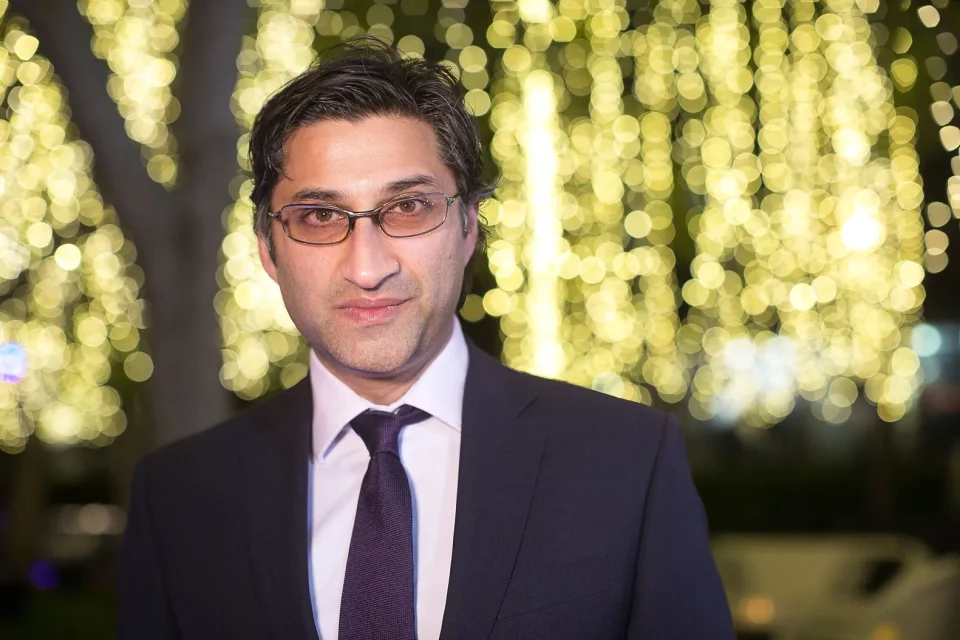
In 2073, Asif Kapadia channels his mastery of documentary filmmaking into a powerful vision of the future rooted in present-day realities. Unlike his earlier works that focused on the intimate lives of public figures, this film scales up to address systemic collapse on a planetary level. Kapadia draws exclusively from archival material and dramatized performances to portray a society fractured by climate emergency, surveillance, and authoritarianism. The resulting film challenges the viewer to reevaluate the world not as it might become, but as it already is.
The story follows Ghost, a solitary figure living beneath the remnants of civilization, navigating tunnels beneath New San Francisco. Ghost’s world is not fantastical; it is composed of footage recognizable from contemporary events. Asif Kapadia transforms familiar images—smog-choked skylines, riot gear, digital maps—into components of a world in decline. Rather than build futuristic sets, the film constructs its dystopia from accumulated evidence, rendering the collapse both personal and collective.
What distinguishes 2073 is its structural complexity. Kapadia divides the editing between documentary specialist Chris King and fiction editor Sylvie Landra, allowing each narrative thread to retain its identity while enhancing the other. The dramatized sequences were filmed using LED volume technology, a method that permits seamless transitions between real footage and constructed environments. Asif Kapadia ensures that each element supports a unified aesthetic—one that avoids the spectacle often associated with dystopian cinema in favor of a grounded and urgent realism.
The film’s thematic core revolves around truth and its erasure. To explore this, Asif Kapadia brings in journalists like Maria Ressa and Carole Cadwalladr, whose testimonies are not presented as detached analysis but as integrated parts of the unfolding story. Their insights serve as a form of narrative resistance, interrupting the film’s silence with reflections on censorship, data manipulation, and democratic erosion. Kapadia avoids presenting them as saviors; instead, they are portrayed as observers caught within the same failing systems they document.
The musical landscape of 2073 deepens the film’s tension. Composer Antonio Pinto worked closely with Kapadia to develop a score before the edit, allowing the music to act as a narrative foundation. The score blends digital pulses with organic instrumentation, reinforcing the hybrid nature of the film. Asif Kapadia uses sound not only to build emotion but to create dissonance—moments where the viewer is unsettled not by what is seen, but by what is felt beneath the surface.
There is a refusal in 2073 to conform to traditional storytelling expectations. Asif Kapadia does not offer exposition, resolution, or closure. Instead, he presents a vision assembled from the consequences of collective inaction. The film ends without uplift, making no promises of renewal. This choice reinforces Kapadia’s belief that cinema must reflect the complexity and discomfort of real-world issues. By leaving the audience in a state of unresolved tension, he shifts responsibility back onto the viewer.
Throughout his career, Asif Kapadia has used film to dissect power structures—be it fame, politics, or history. With 2073, he broadens his scope to include planetary systems and global consequences. The film becomes not just a document, but a diagnostic. It asks how far societies are willing to let collapse advance before intervention is no longer possible. In doing so, it positions itself as a cinematic threshold—a place where past decisions converge with future implications.